
ADIZO EXPORTS is a Mumbai-based merchant export company supplying quality Indian products to domestic and global markets. We operate as an independent merchant trader, sourcing from vetted Indian manufacturers and supplying under our own documentatio...
- (+91) 7700972806
- contact@adizoexports.com
- IB Patel Road, Jay Prakash Nagar, Goregaon East, , Mumbai, Maharashtra, India. 400063
© 2020 ADIZO EXPORTS. All Rights Reserved
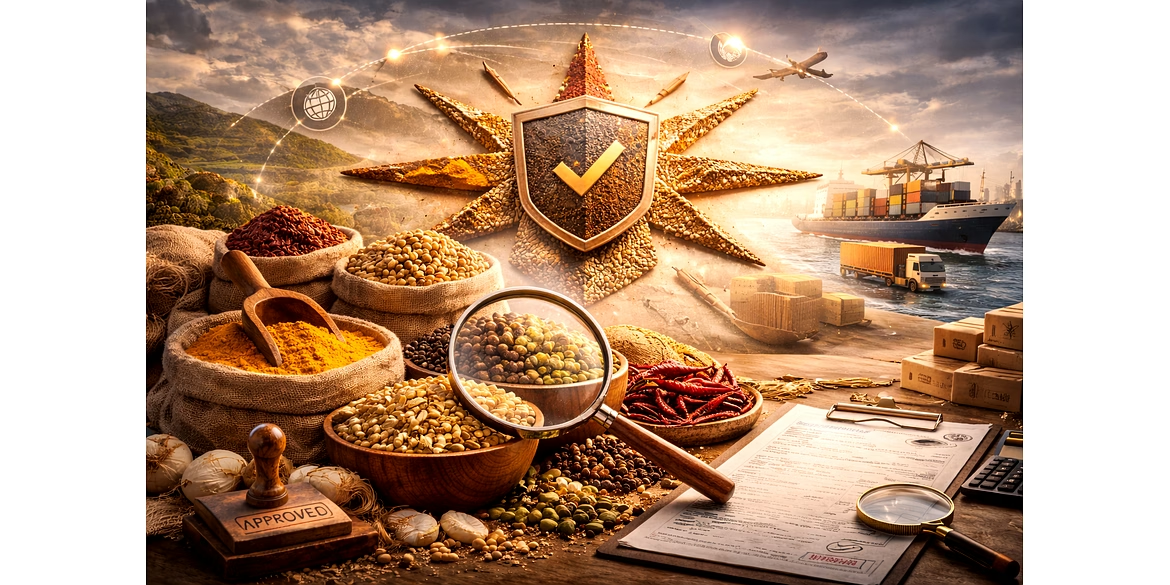

India is one of the world’s leading producers and exporters of whole spices, supplying global markets with turmeric, cumin, coriander, cardamom, black pepper, and red chillies. For importers, distributors, and food manufacturers, sourcing whole spices from India can offer strong advantages in variety, scale, and competitiveness—when quality, compliance, and sourcing practices are evaluated carefully.
This guide outlines what global buyers should validate to ensure reliable and compliant spice sourcing from India. It covers key quality parameters for whole spices, post-harvest handling standards, food safety requirements, export documentation, and sourcing tips for long-term reliability.
Why India Is a Global Hub for Whole Spices
India’s diverse agro-climatic zones and long-standing agricultural expertise make it a preferred sourcing destination for whole spices. For global buyers, this translates into access to multiple origins, strong production volumes, and established export capabilities for products like turmeric, cumin seeds, coriander seeds, cardamom, black pepper, and whole red chillies.
• Wide range of spice varieties and origins supporting different flavor profiles.
• Strong production volumes that help meet global demand and seasonal requirements.
• Established export infrastructure and experience in international trade.
• Competitive sourcing compared to other origins for many whole spice categories.
Buyers often improve sourcing outcomes by selecting the right origin region per spice and aligning specifications to end-use requirements.
Quality Parameters Importers Should Evaluate
Quality assessment is critical when sourcing whole spices from India because variation can impact aroma, flavor strength, color, shelf life, and food safety compliance. Importers and food manufacturers typically evaluate both sensory quality and technical parameters to ensure consistency across shipments.
• Cleanliness and absence of foreign matter to reduce contamination risk.
• Natural color, aroma, and flavor strength aligned with product specs.
• Proper drying and moisture control to support shelf stability and prevent mold.
• Uniform size and appearance for consistent processing and downstream blending.
For repeat orders, buyers often standardize evaluation using COAs, pre-shipment samples, and agreed specification limits by spice type (turmeric, cumin, coriander, cardamom, black pepper, red chillies).
Processing and Post-Harvest Handling Standards
Processing practices directly influence the quality and shelf life of whole spices. Post-harvest handling affects moisture stability, cleanliness, and contamination risk. Importers should verify suppliers follow hygienic, controlled procedures for cleaning, sorting, drying, and storage before export dispatch.
• Cleaning, sorting, and grading processes to ensure export-quality lots.
• Hygienic handling and storage conditions aligned with food safety standards.
• Controlled drying to prevent mold, spoilage, and quality degradation.
• Export-grade packaging to maintain freshness and reduce moisture uptake.
Suppliers with strong post-harvest controls typically deliver more consistent spice quality across seasons.
Compliance and Food Safety Requirements
Whole spices are subject to food safety and import regulations that vary by destination country. Importers must ensure compliance to avoid customs issues, regulatory holds, and reputational risk. Food safety expectations often include contamination control, residue compliance, and shipment traceability for each batch.
• Alignment with destination-country food safety regulations and import rules.
• Proper export and customs documentation to support clearance and compliance.
• Residue and contamination control as per market norms and buyer requirements.
• Traceability and batch identification for audit readiness and issue resolution.
Many global buyers request documented food safety systems and test results as part of supplier onboarding.
Export Documentation and Customs Considerations
Accurate export documentation supports smooth customs clearance and predictable delivery timelines for whole spice shipments. Documentation accuracy becomes especially important when importing multiple spice types, where HS code classification, labeling, and traceability must match across all paperwork.
• Correct HS code classification for each spice to support duty assessment.
• Complete export documentation and shipping paperwork for every container.
• Clear labeling and shipment traceability aligned with buyer requirements.
• Compliance with import authority requirements to minimize customs queries.
Importers often reduce delays by reviewing draft documents before dispatch and maintaining a checklist per destination market.
Sourcing Tips for Long-Term Reliability
Successful whole spices sourcing depends on more than one shipment. Importers and ingredient buyers should prioritize supplier reliability, transparency, and the ability to scale volumes while keeping quality consistent. Clear communication on specifications and logistics planning helps stabilize supply continuity.
• Consistent quality across multiple shipments with stable specifications.
• Clear communication on specifications, packing formats, and contracted volumes.
• Ability to support repeat and bulk orders without compromising standards.
• Experience in international logistics coordination to protect delivery timelines.
A robust approach includes supplier scorecards, periodic quality reviews, and defined corrective-action processes for deviations.
Ethical and Responsible Spice Trade
Ethical sourcing and responsible trade practices are increasingly important for global buyers focused on sustainability and brand reputation. Transparent sourcing reduces reputational risk and supports resilient supply chains, especially for high-volume spice categories used across consumer products.
• Transparent sourcing and fair trade practices where applicable.
• Compliance-driven and lawful export operations with documented processes.
• Long-term sustainability in supply chains through responsible procurement standards.
Buyers may include ethical sourcing in supplier onboarding criteria and RFP scoring.
Frequently Asked Questions (FAQ)
Which whole spices are commonly exported from India?
India exports many whole spices, including turmeric, cumin seeds, coriander seeds, cardamom, black pepper, and whole red chillies.
What quality checks should importers perform on whole spices?
Importers should assess cleanliness, moisture levels, aroma, color, size uniformity, and absence of contaminants or foreign matter.
Are Indian spice exports subject to food safety regulations?
Yes. Whole spices must comply with destination-country food safety standards and import regulations, including documentation and testing requirements.
How important is moisture control in whole spices?
Moisture control is critical to prevent mold growth, preserve flavor and aroma, and ensure shelf stability during transit and storage.
What documentation is required for importing whole spices?
Typical documents include commercial invoices, packing lists, shipping documents, HS code classification, and regulatory certificates as applicable to the importing country.
How can buyers ensure consistent spice quality across shipments?
Clear specifications, regular quality checks, pre-shipment inspections, and working with experienced export partners help maintain consistency across shipments.
Why is ethical sourcing important in the spice trade?
Ethical sourcing supports sustainable agriculture, reduces supply chain risk, and strengthens long-term trust between global buyers and suppliers.
Conclusion: A Practical Checklist for Confident Spice Imports
Sourcing whole spices from India can deliver strong value for importers and food manufacturers, but success depends on disciplined evaluation of quality, post-harvest handling, compliance readiness, and documentation accuracy. By prioritizing moisture control, cleanliness, residue and contamination management, traceability, export documentation, and reliable logistics coordination, buyers can build long-term, compliant supply partnerships across turmeric, cumin, coriander, cardamom, black pepper, and red chillies.