
ADIZO EXPORTS is a Mumbai-based merchant export company supplying quality Indian products to domestic and global markets. We operate as an independent merchant trader, sourcing from vetted Indian manufacturers and supplying under our own documentatio...
- (+91) 7700972806
- contact@adizoexports.com
- IB Patel Road, Jay Prakash Nagar, Goregaon East, , Mumbai, Maharashtra, India. 400063
© 2020 ADIZO EXPORTS. All Rights Reserved
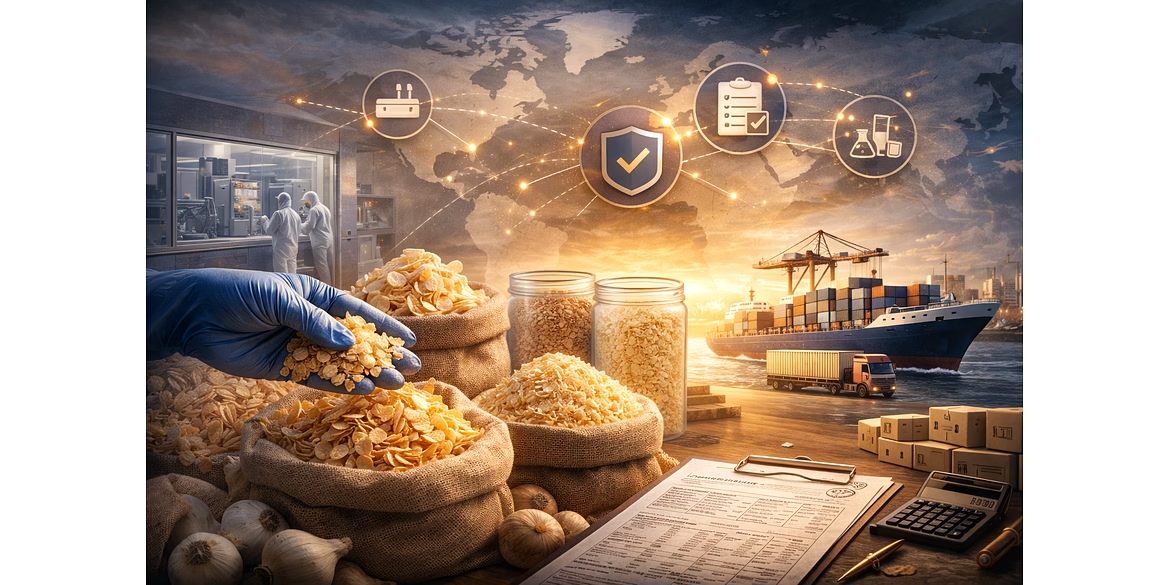

Dehydrated onion and dehydrated garlic products are essential ingredients in the global food supply chain. Food manufacturers, spice blenders, seasoning houses, and ingredient distributors rely on dehydrated onion flakes, onion granules, onion powder, garlic flakes, garlic granules, and garlic powder for consistent flavor, shelf stability, and easy integration into industrial formulations.
As global demand continues to grow, importers need to understand market trends, sourcing considerations, quality parameters, and regulatory realities that impact successful procurement and supply continuity. This guide breaks down what to look for when importing dehydrated onion and garlic ingredients, including processing standards, compliance expectations, and how to build sustainable supplier relationships.
Why Dehydrated Onion & Garlic Are High-Demand Ingredients
Dehydrated onion and dehydrated garlic deliver operational convenience, longer shelf life, and consistent flavor compared to fresh produce. These benefits drive demand across snacks, sauces, ready meals, soups, spice mixes, and prepared foods where uniformity and batch consistency matter for large-scale production.
• Extended shelf life versus fresh onions and garlic, improving inventory planning.
• Uniform flavor and color suited for industrial food manufacturing.
• Ease of storage and transportation, reducing cold-chain dependence.
• Consistency across batches for standardized recipes and branded products.
For importers, these attributes translate to lower waste, fewer quality fluctuations, and stable production outputs.
Market Trends Driving Global Demand
Global food manufacturing has shifted toward processed and convenience foods, increasing reliance on dehydrated ingredients. At the same time, expanding consumption of packaged foods and foodservice in emerging markets is accelerating the demand for dehydrated garlic and dehydrated onion across multiple product categories.
• Growth in processed and packaged foods, driving consistent ingredient demand.
• Rising foodservice and quick-serve sectors that require standardized inputs.
• Expanding markets in Asia, MENA, Africa, and Latin America.
• Ingredient standardization needs for global brands operating across regions.
These trends make sourcing strategy and supplier reliability increasingly important. Importers who secure stable quality specs and predictable lead times gain resilience during demand spikes.
Quality Parameters Importers Must Prioritize
Not all dehydrated onion and garlic products are created equal. Importers should assess both sensory characteristics and technical parameters that affect performance in industrial use. Clear specifications help prevent batch variation, reformulation issues, and downstream customer complaints.
• Moisture content: Impacts shelf life, caking risk, and microbial stability.
• Flavour profile: Intensity and uniformity for consistent manufacturing outcomes.
• Particle size: Flakes, granules, or powders depending on application and dispersion needs.
• Colour retention: Important for finished goods appearance and brand consistency.
• Purity and foreign matter checks: Critical for food safety and compliance.
Importers often standardize evaluation using COAs, retained samples, and specification limits for each SKU (dehydrated onion flakes, onion granules, onion powder; dehydrated garlic flakes, garlic granules, garlic powder).
Processing & Handling Standards That Matter
Dehydration processes—from slicing and drying to grinding and packaging—directly influence shelf stability and end-use performance. For industrial buyers, supplier processing and handling standards are as important as raw material quality, particularly when sourcing high-volume dehydrated onion and dehydrated garlic ingredients.
• Industrial dehydration systems with controlled temperature to protect flavor and color.
• Hygienic processing environments aligned with food safety standards.
• Packaging that preserves quality (vacuum seal, humidity control, barrier liners).
• Batch testing before shipment to confirm specs and reduce import risk.
Importers can strengthen quality assurance by requesting process details (drying curves, metal detection, sieving controls) and ensuring packaging is suitable for transit conditions.
Sourcing India as a Leading Supplier
India has emerged as a major sourcing destination for dehydrated onion and dehydrated garlic products due to a large raw material base, established dehydration facilities, and competitive production costs. Understanding India’s supply dynamics helps importers secure reliable, quality-driven partners and improve supply continuity.
• Strong production ecosystems in key regions supporting dehydrated onion and garlic exports.
• Year-round availability with effective inventory planning and contracted volumes.
• Competitive cost structures for flakes, granules, and powders.
• Experienced processors with export documentation and international shipping capability.
When sourcing from India, importers should validate consistency controls, documentation readiness, and logistics planning as part of supplier qualification.
Regulatory and Compliance Requirements for Importers
Importing dehydrated food ingredients requires adherence to food safety, labelling, and documentation standards in the destination market. Importers should confirm compliance expectations early to prevent customs delays and ensure smooth clearance for dehydrated onion and garlic shipments.
• Import permits and notifications as required by local laws and product categories.
• Food safety certifications (e.g., HACCP, ISO, GMP) aligned with buyer requirements.
• Accurate Harmonized System (HS) codes for classification and duty assessment.
• Traceability documentation for each shipment, including batch identifiers and COAs.
For operational clarity, many importers maintain a compliance packet per product SKU and destination country.
Building Sustainable Supplier Relationships
Supply consistency and repeatable quality are essential for long-term partnerships. Importers can reduce procurement risk by investing in transparent communication, robust compliance checks, and structured supplier performance monitoring for dehydrated onion and dehydrated garlic sourcing programs.
• Clear contracts and quality agreements covering specs, tolerances, and remedies.
• Pre-shipment inspections and third-party audits for confidence in compliance.
• Reliable logistics planning and delivery forecasting to protect production schedules.
• Ongoing supplier performance reviews to maintain standards as volumes scale.
Strong supplier relationships are built on shared expectations, consistent documentation, and proactive communication around seasonal availability and lead times.
Frequently Asked Questions (FAQ)
Why are dehydrated onion and garlic products popular with global importers?
They offer extended shelf life, consistent flavor, easier storage, and greater convenience for large-scale food production and standardized recipes.
How should importers evaluate quality for these products?
Key parameters include moisture content, flavor consistency, particle size (flakes, granules, powders), color retention, and absence of foreign matter.
What processing standards should importers look for?
Hygienic dehydration facilities, controlled drying and grinding processes, suitable packaging, and batch testing before shipment are critical for import reliability.
Are there regulatory requirements for importing these ingredients?
Yes. Importers must comply with food safety standards, accurate HS codes, labeling rules, and destination-specific import regulations and documentation requirements.
How can importers ensure supply consistency?
Strong supplier relationships, clear quality agreements, pre-shipment checks, and logistics planning help maintain consistent supply and reduce disruption risk.
Do dehydrated onion and garlic products require special storage?
They are shelf-stable, but cool, dry, airtight storage conditions help preserve flavor, color, and flowability for longer periods.
Why consider India as a sourcing destination?
India offers competitive pricing, established processing infrastructure, large raw material availability, and experienced export partners for dehydrated onion and garlic products.
Conclusion: Align Quality, Compliance, and Supply Strategy
Rising global demand for dehydrated onion and dehydrated garlic products is being driven by processed food growth, standardization needs, and supply chain efficiency. Importers can succeed by prioritizing defined quality parameters, verifying processing and handling standards, ensuring regulatory compliance and traceability, and investing in sustainable supplier relationships—especially when sourcing from major supply regions such as India.