
ADIZO EXPORTS is a Mumbai-based merchant export company supplying quality Indian products to domestic and global markets. We operate as an independent merchant trader, sourcing from vetted Indian manufacturers and supplying under our own documentatio...
- (+91) 7700972806
- contact@adizoexports.com
- IB Patel Road, Jay Prakash Nagar, Goregaon East, , Mumbai, Maharashtra, India. 400063
© 2020 ADIZO EXPORTS. All Rights Reserved
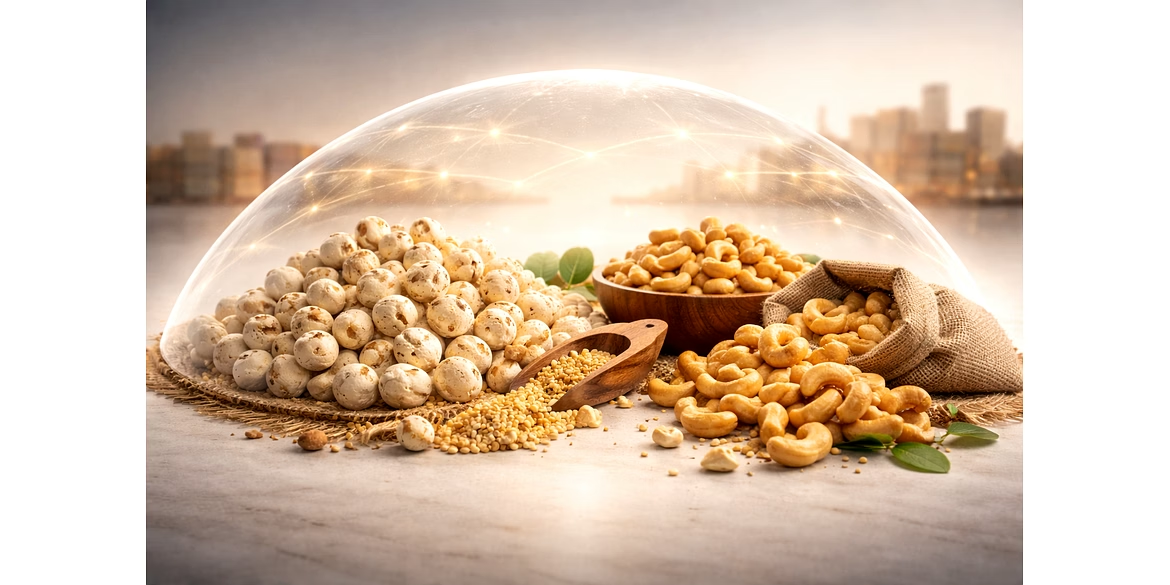

India has emerged as a key sourcing destination for foxnuts (makhana) and cashews, supplying global buyers across the snack, health food, ingredient, and foodservice sectors. With rising demand for nutritious snacks and plant-based ingredients, importers increasingly evaluate Indian suppliers for quality, compliance, and supply reliability.
Foxnuts and cashews are now used widely in retail snack lines, private-label products, roasted and flavored formats, and ingredient applications for food manufacturing. This guide outlines the critical factors global buyers consider when sourcing foxnuts (makhana) and cashew nuts from India, including quality parameters, processing standards, export documentation, packaging expectations, supply scalability, and ethical sourcing.
Growing Global Demand for Foxnuts and Cashews
International demand for foxnuts (makhana) and cashews is being driven by consumer preferences for healthier snacking, plant-based options, and natural ingredients. These products are increasingly positioned as nutrient-dense snacks and versatile ingredients across retail, private-label, foodservice, and industrial supply chains.
• Rising demand for healthy, plant-based snack options in global markets.
• Increased use in roasted, flavored, and value-added formats for retail and foodservice.
• Strong growth across North America, Europe, the Middle East, and Asia.
Buyers often define product specs by channel, such as premium retail-grade cashews, bulk cashew kernels for food manufacturing, or graded makhana for flavored snack formats.
Quality Parameters Buyers Prioritize
Quality consistency is a top priority for global buyers sourcing foxnuts and cashews from India. Both products must meet visual, sensory, and technical parameters to perform well in downstream processing or to satisfy retail presentation standards. Clear acceptance criteria help reduce batch variation and protect brand reputation.
• Uniform size, color, and appearance aligned with buyer grade requirements.
• Cleanliness and absence of foreign matter to support food safety expectations.
• Proper roasting and moisture control to protect shelf life and reduce spoilage risk.
• Consistent taste, texture, and crunch for consumer acceptance and repeat orders.
Importers often standardize quality assurance using COAs, retained samples, and pre-shipment checks for each lot.
Processing and Handling Standards
Processing methods play a critical role in determining product quality, shelf life, and compliance readiness. For foxnuts (makhana), grading and moisture stability influence crunch and appearance. For cashews, handling impacts breakage, freshness, and contamination risk. Buyers expect hygienic and standardized processing practices supported by documented controls.
• Controlled roasting, cleaning, and grading processes for consistent output.
• Hygienic handling and packaging environments aligned with food safety standards.
• Moisture and temperature control during storage to preserve freshness and crunch.
• Batch-level quality inspections before shipment to verify specifications.
Strong processing discipline supports repeatability across shipments and helps buyers maintain consistent product performance.
Compliance and Food Safety Requirements
Foxnuts and cashews are subject to food safety and import regulations that vary by destination market. Buyers must ensure products meet regulatory and documentation requirements to avoid customs delays, inspections, or rejected shipments. Compliance readiness is often a key part of supplier onboarding for snack and ingredient imports.
• Alignment with destination-country food safety regulations and import requirements.
• Proper export documentation and HS code classification for each product.
• Traceability and batch identification for audit readiness and issue resolution.
• Compliance with labeling and packaging norms required by the importing market.
Many importers reduce risk by maintaining a per-market compliance packet and reviewing draft documents before dispatch.
Packaging and Shelf-Life Expectations
Export-grade packaging is essential to preserve freshness and protect product integrity during long-distance transportation. Buyers evaluate packaging formats based on channel needs, whether bulk ingredient supply, foodservice packs, or retail-ready presentation. For both makhana and cashews, moisture protection and batch identification are key for shelf-life stability.
• Moisture-resistant and contamination-proof packaging to maintain quality.
• Bulk and retail-ready packaging options aligned with buyer requirements.
• Clear batch and shipment identification for traceability and inventory control.
• Shelf-life stability designed for extended transit periods and warehousing.
For importers, packaging decisions should reflect transit humidity exposure, storage conditions, and repacking requirements in the destination market.
Supply Reliability and Scalability
Global buyers seek suppliers who can meet recurring demand and scale volumes as markets grow. Reliable sourcing of foxnuts (makhana) and cashews depends on stable raw material procurement, predictable processing capacity, and consistent quality assurance as order volumes increase.
• Ability to support bulk and repeat orders with consistent specifications.
• Stable raw material sourcing to reduce shortage risk and seasonal disruption.
• Scalable operations aligned with buyer growth without quality compromise.
Buyers often strengthen supply continuity with forecasting, clear volume planning, and supplier performance reviews.
Ethical and Responsible Sourcing
Ethical trade practices and responsible sourcing are increasingly important for global buyers focused on sustainability, transparency, and brand reputation. Buyers may evaluate supplier practices related to ethical sourcing, fair trade alignment where applicable, and supply chain transparency for both foxnuts and cashew exports.
• Ethical sourcing and fair trade practices where applicable to buyer standards.
• Transparent supply chain operations with traceability and clear disclosures.
• Long-term commitment to responsible trade and sustainable sourcing relationships.
Ethical sourcing reduces reputational risk and supports resilient supply chains.
Frequently Asked Questions (FAQ)
What makes India a key exporter of foxnuts and cashews?
India offers strong agricultural production, established processing capabilities, and competitive export infrastructure for both foxnuts (makhana) and cashews.
What quality checks should buyers perform on foxnuts and cashews?
Buyers typically evaluate size uniformity, moisture levels, roasting quality, cleanliness, and overall batch consistency for repeat orders.
Are foxnuts and cashews subject to food safety regulations?
Yes. Both products must comply with destination-country food safety and import regulations, supported by required documentation and traceability.
How important is moisture control for these products?
Moisture control is critical to maintain crunch, prevent spoilage, reduce microbial risk, and ensure shelf stability during storage and transit.
What packaging formats are commonly used for exports?
Bulk export packaging and customized retail-ready packaging are commonly used, depending on buyer requirements, channel needs, and destination-market norms.
How can buyers ensure consistent supply from India?
Partnering with experienced exporters, setting clear quality and volume specifications, and maintaining proactive logistics planning improves supply consistency.
Why is ethical sourcing important for global buyers?
Ethical sourcing supports sustainability, reduces supply chain risk, and builds long-term trust with international markets and brand stakeholders.
Conclusion: What Global Buyers Should Validate Before Importing
Sourcing foxnuts (makhana) and cashews from India can support growing global demand for healthy snacks and plant-based ingredients, but successful procurement depends on disciplined evaluation. Buyers should validate quality parameters, processing and handling standards, compliance and export documentation readiness, packaging and shelf-life protection, supply scalability, and ethical sourcing practices. With these checks in place, importers can reduce risk, improve shipment reliability, and build long-term sourcing partnerships.