
ADIZO EXPORTS is a Mumbai-based merchant export company supplying quality Indian products to domestic and global markets. We operate as an independent merchant trader, sourcing from vetted Indian manufacturers and supplying under our own documentatio...
- (+91) 7700972806
- contact@adizoexports.com
- IB Patel Road, Jay Prakash Nagar, Goregaon East, , Mumbai, Maharashtra, India. 400063
© 2020 ADIZO EXPORTS. All Rights Reserved
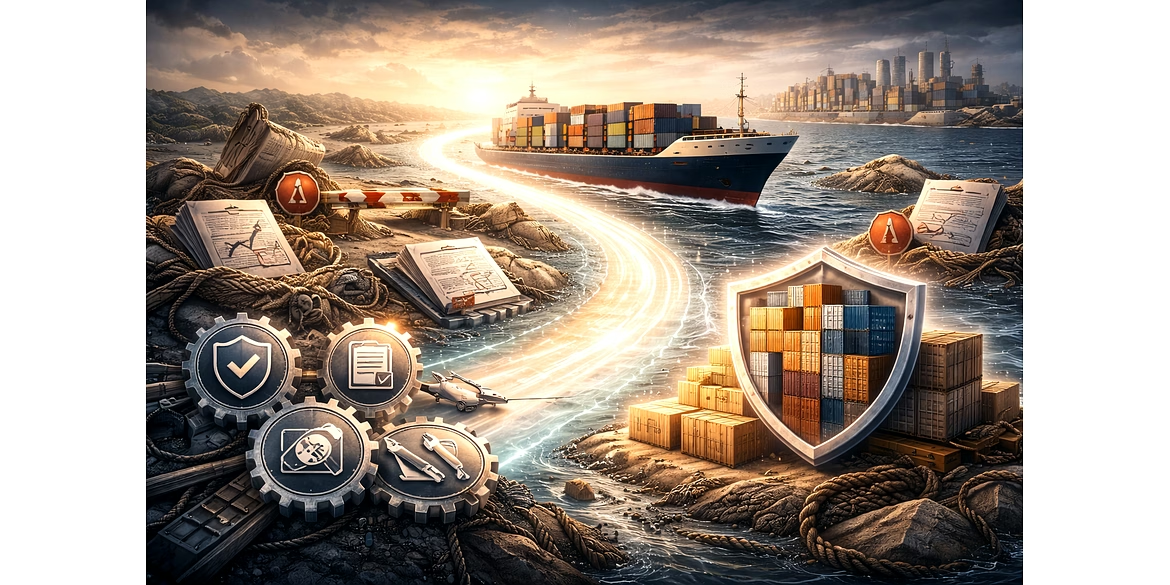

International trade gives global buyers and importers access to diverse sourcing opportunities, competitive pricing, and scalable supply chains. However, cross-border trade also brings operational, regulatory, and logistics challenges that can impact cost, timelines, customs clearance, and overall reliability. Understanding these international trade challenges—and how to manage them effectively—is essential for resilient global trade operations.
From export documentation and regulatory compliance to shipping disruptions and quality consistency, importers often face recurring friction points. This guide breaks down the most common challenges in international trade and provides practical steps to reduce risk, improve predictability, and strengthen long-term supplier partnerships.
Complex Export Documentation and Paperwork
One of the most common challenges in international trade is managing extensive export documentation and shipment paperwork. Errors, mismatched details, or missing documents can trigger customs holds, penalties, and shipment delays—especially when importing regulated, food, or agricultural products.
How to overcome it:
• Ensure complete and accurate export documentation for every shipment.
• Verify invoices, packing lists, and shipping documents before dispatch.
• Work with export partners experienced in documentation management.
A best practice is to request draft documents in advance and cross-check names, addresses, HS codes, quantities, weights, and product descriptions for alignment.
Regulatory and Compliance Differences Across Countries
Each country has its own import regulations, food safety standards, labeling requirements, and compliance rules. For importers sourcing from multiple markets, keeping up with changes—and ensuring products and documentation meet destination-country requirements—can be difficult and time-consuming.
How to overcome it:
• Stay informed about destination-country import regulations and updates.
• Align products and documentation with local compliance requirements.
• Partner with exporters who follow a compliance-first approach.
Importers often reduce risk by maintaining a market-specific checklist per product category and storing a standard compliance packet for repeat shipments.
Customs Clearance Delays
Customs clearance delays are a major risk in international trade. Holds and inspections can disrupt supply chains, increase storage and demurrage costs, and affect production schedules. Often, customs issues are triggered by HS code misclassification, incomplete documentation, or unclear product descriptions.
How to overcome it:
• Ensure accurate HS code classification for each product and shipment.
• Maintain clear and traceable documentation, including batch identification.
• Coordinate proactively with customs brokers and logistics stakeholders.
Sharing documents early and confirming customs requirements before shipping can reduce clearance friction.
Logistics and Shipping Disruptions
Port congestion, carrier delays, and unexpected transit disruptions are common challenges in global shipping. These issues can be especially costly for time-sensitive shipments, bulk orders, and products with packaging or storage constraints. Without proactive planning, logistics disruptions can undermine on-time delivery performance.
How to overcome it:
• Plan shipments with realistic transit timelines and buffer for congestion.
• Work with reliable logistics partners and carriers with proven performance.
• Use proactive shipment tracking and contingency planning for disruptions.
Importers often improve predictability by aligning dispatch windows, booking schedules, and documentation cutoffs in one shared plan.
Quality Consistency Across Shipments
Maintaining consistent product quality across multiple shipments can be challenging, particularly for food and agricultural products affected by seasonality, raw material variation, and processing differences. Quality inconsistency can lead to customer complaints, reformulation costs, and regulatory exposure for importers.
How to overcome it:
• Define clear quality specifications, tolerances, and acceptance standards.
• Conduct batch-level quality checks and verify COAs before shipment.
• Build long-term supplier relationships focused on consistency and transparency.
Consider implementing a supplier scorecard and periodic quality reviews to keep standards stable as volumes grow.
Communication Gaps Between Trade Partners
Differences in time zones, language, and business practices can cause misunderstandings and delays in decision-making. Communication gaps can also lead to incorrect orders, missed documentation deadlines, and slow issue resolution—especially when multiple stakeholders are involved in procurement, compliance, and logistics.
How to overcome it:
• Establish clear communication channels and defined points of contact.
• Use structured processes for order confirmation, updates, and approvals.
• Work with partners who prioritize transparency, responsiveness, and documentation discipline.
Many importers use a standard update cadence (order confirmation, production status, pre-shipment documents, dispatch, and ETA) to reduce surprises.
Managing Risk in Long-Term Global Trade
International trade involves financial, operational, and regulatory risks that can impact long-term stability if not managed proactively. Market volatility, supply interruptions, shifting regulations, and logistics constraints can all affect the reliability of cross-border sourcing programs.
How to overcome it:
• Diversify sourcing and logistics options where possible to reduce single-point failure risk.
• Follow compliance-driven trade practices to reduce regulatory exposure.
• Partner with experienced exporters who anticipate, communicate, and mitigate risks.
Risk management improves when importers combine supplier qualification, documentation discipline, and proactive logistics planning into one repeatable workflow.
Frequently Asked Questions (FAQ)
What is the biggest challenge in international trade?
Export documentation errors and regulatory non-compliance are among the most common and impactful challenges in international trade, often leading to customs delays and added costs.
How can importers reduce customs clearance delays?
Accurate documentation, correct HS codes, and proactive coordination with customs brokers and authorities help reduce clearance delays and prevent shipment holds.
Why do regulations vary so much between countries?
Each country has its own legal, safety, and economic policies governing imports, so regulatory and compliance requirements are market-specific and can change over time.
How can logistics disruptions be minimized?
Planning shipments early, selecting reliable logistics partners, using tracking, and maintaining contingency plans can significantly reduce logistics-related risks.
What role does supplier experience play in overcoming trade challenges?
Experienced export partners anticipate documentation and compliance requirements, coordinate logistics more effectively, and resolve issues faster—improving shipment reliability.
How important is communication in global trade?
Clear communication reduces misunderstandings, speeds up approvals, prevents documentation errors, and improves overall supply chain predictability.
Can long-term trade risks be fully eliminated?
Risks cannot be eliminated entirely, but they can be significantly reduced through compliance discipline, proactive planning, diversification, and reliable partnerships.
Conclusion: Build Resilient International Trade Operations
International trade challenges are manageable when importers adopt structured processes for documentation, compliance, quality assurance, logistics planning, and communication. By focusing on accurate export paperwork, destination-country regulatory alignment, correct HS classification, proactive shipping coordination, and long-term supplier relationships, global buyers can reduce delays, protect costs, and improve supply chain reliability.